

Protein Powder That Doesn’t Cause Bloating: What to Look For
If protein powder leaves you bloated, gassy, or uncomfortable, the issue is often not protein itself. More often, it comes down to the formula: sweeteners, gums, lactose content, serving size, flavor systems, or the way the protein was processed.
That distinction matters. Many people blame whey protein and switch to alternatives that may be harder to digest or less transparent than they expected. The better question is not simply, “Does protein powder cause bloating?” It is, “What is actually inside this protein powder, and how was it made?”
Here is how to choose a protein powder that is less likely to cause bloating, especially if you have sensitive digestion or use protein daily.
Why Protein Powder Can Cause Bloating
Protein powder can contribute to bloating for several reasons. The protein source matters, but the full ingredient list often matters more. A clean protein powder should be simple. The shorter the ingredient list, the easier it is to understand what your body may be reacting to.
The most common triggers include artificial sweeteners, sugar alcohols, gums, thickeners, lactose from whey concentrate, large serving sizes, flavor systems, unnecessary fillers, and harsh or high-heat processing.
If your protein powder has a long ingredient list, your gut may be responding to the extras, not the protein.
Artificial Sweeteners and Sugar Alcohols
Many flavored protein powders use sucralose, sorbitol, xylitol, maltitol, or other sweeteners to create a dessert-like taste without added sugar.
For some people, these ingredients can be difficult to digest. Sugar alcohols in particular may pass through the small intestine incompletely absorbed, then ferment in the large intestine. That fermentation can contribute to gas, pressure, and bloating.
This is why a protein powder can look “healthy” on the front label but still feel heavy or uncomfortable after you drink it.
Gums, Thickeners, and Fillers
Gums and thickeners are common in commercial protein powders because they improve texture, creaminess, and mixability.
Ingredients like xanthan gum, carrageenan, cellulose gum, and similar additives may help create a thicker shake, but they are not always easy on digestion.
Some people tolerate them well. Others notice bloating, cramping, gas, or heaviness after using them regularly. If your protein powder contains multiple texture agents, stabilizers, flavor systems, and fillers, the formula may be doing more than your gut wants it to do.
Lactose in Whey Concentrate
Whey protein concentrate and whey protein isolate are not the same.
Whey concentrate usually contains more lactose because it is less filtered. For people who are sensitive to lactose, that can make a major difference.
Whey protein isolate goes through additional filtration to remove most of the lactose, fat, and carbohydrates, leaving a higher-protein, lower-lactose product.
This is why some people who think they cannot tolerate whey may simply be reacting to whey concentrate, not a properly filtered whey isolate.
If bloating is your concern, look for whey protein isolate clearly on the label. Be careful with “whey protein blend,” because that often includes concentrate.
Why Whey Protein Isolate May Be Easier to Digest
A well-made whey protein isolate is often a better choice for people who experience bloating from protein powder.
Whey isolate is more filtered than concentrate. It contains more protein by weight and significantly less lactose, fat, and carbohydrates.
That does not mean every whey isolate is automatically clean or easy to digest. A whey isolate can still contain gums, sweeteners, flavors, fillers, and unnecessary additives.
The best option is a simple whey protein isolate with minimal ingredients, gentle processing, no artificial sweeteners, no gums, and third-party testing for purity.
Why Processing Method Matters
Most people look at protein grams, flavor, and price. Very few ask how the protein was processed.
But processing method can affect lactose content, digestibility, purity, and the quality of the finished protein.
For whey protein, one important distinction is between more aggressive processing methods and cold cross-flow microfiltration.
Cold cross-flow microfiltration uses physical filtration to separate protein from lactose, fat, and carbohydrates. When done properly, this method avoids high heat and harsh chemical solvents. The goal is to keep the protein in a more native, less denatured state while reducing unwanted components.
For daily users, this matters. A protein powder that feels slightly uncomfortable once may become a real issue when used every day.
Is Plant-Based Protein Better for Bloating?
Not always.
Plant-based protein is often marketed as easier on digestion, but the reality is more individual. Pea protein, rice protein, hemp protein, and other plant proteins can contain plant compounds and fibers that may ferment in the gut and contribute to gas or bloating in some people.
Plant protein can be a good option for people who avoid dairy completely. But it is not automatically gentler than whey.
Many people who feel bloated from plant protein may do better with a clean, unflavored whey protein isolate that is virtually lactose-free and made without gums, sweeteners, or unnecessary additives.
There is also a purity conversation. Independent testing from groups such as Clean Label Project and Consumer Reports has raised concerns about heavy metals in some protein powders, especially plant-based and chocolate-flavored options. This does not mean all plant proteins are unsafe. It means testing, sourcing, and transparency matter.
For daily users, the better question is not “plant or whey?” It is: “Is this formula clean, tested, minimal, and easy for my body to digest?”
How to Choose a Protein Powder That Doesn’t Cause Bloating
Choose Whey Protein Isolate, Not Concentrate
If lactose or heaviness is your concern, whey isolate is usually the better place to start. It is more filtered than concentrate and contains far less lactose.
Look for the words whey protein isolate clearly on the label. Avoid vague terms like “whey protein blend” if you are trying to reduce bloating.
Avoid Gums, Sweeteners, and Sugar Alcohols
If you bloat easily, avoid protein powders with long ingredient lists.
Common ingredients to watch for include sucralose, sorbitol, xylitol, maltitol, carrageenan, xanthan gum, cellulose gum, maltodextrin, artificial flavors, long flavor systems, and unnecessary fillers.
A cleaner formula usually has a shorter ingredient list.
Choose Unflavored When Possible
Unflavored protein powder is often the simplest choice for sensitive digestion.
It avoids many of the sweeteners, flavors, gums, and color systems that can make protein powders harder to tolerate. It also gives you more control over how you use it.
You can add unflavored whey isolate to coffee, smoothies, Greek yogurt, oatmeal, or recipes without forcing your body to process extra additives.
Look for Cold Microfiltration
Not all isolates are processed the same way. Cold cross-flow microfiltration is a gentle filtration method designed to reduce lactose and unwanted components without high heat or harsh chemical processing.
If a brand does not disclose its filtration method, that is worth noticing.
Verify Third-Party Testing
“Third-party tested” is a phrase many brands use, but the details matter.
Look for testing that includes heavy metals and purity, not just banned substances. Heavy metal exposure can vary depending on ingredient source, soil, processing, and flavoring ingredients.
For a product used daily, testing and transparency should not be optional.
Choose Transparent Sourcing
Protein quality starts with the raw material.
Grass-fed whey can be a strong choice, but the source and verification standard matter. Generic grass-fed claims are not the same as clearly sourced whey from a known dairy region with documented standards.
For a premium daily protein, look for clear sourcing, transparent testing, and a formula that does not rely on flavor systems to hide poor raw material quality.
What a Clean, Non-Bloating Protein Formula Looks Like
A protein powder designed for sensitive digestion should look simple.

It should use whey protein isolate, not concentrate. It should be filtered to reduce lactose. It should avoid gums, artificial sweeteners, sugar alcohols, fillers, flavors, and unnecessary additives. It should disclose sourcing and be tested for purity.
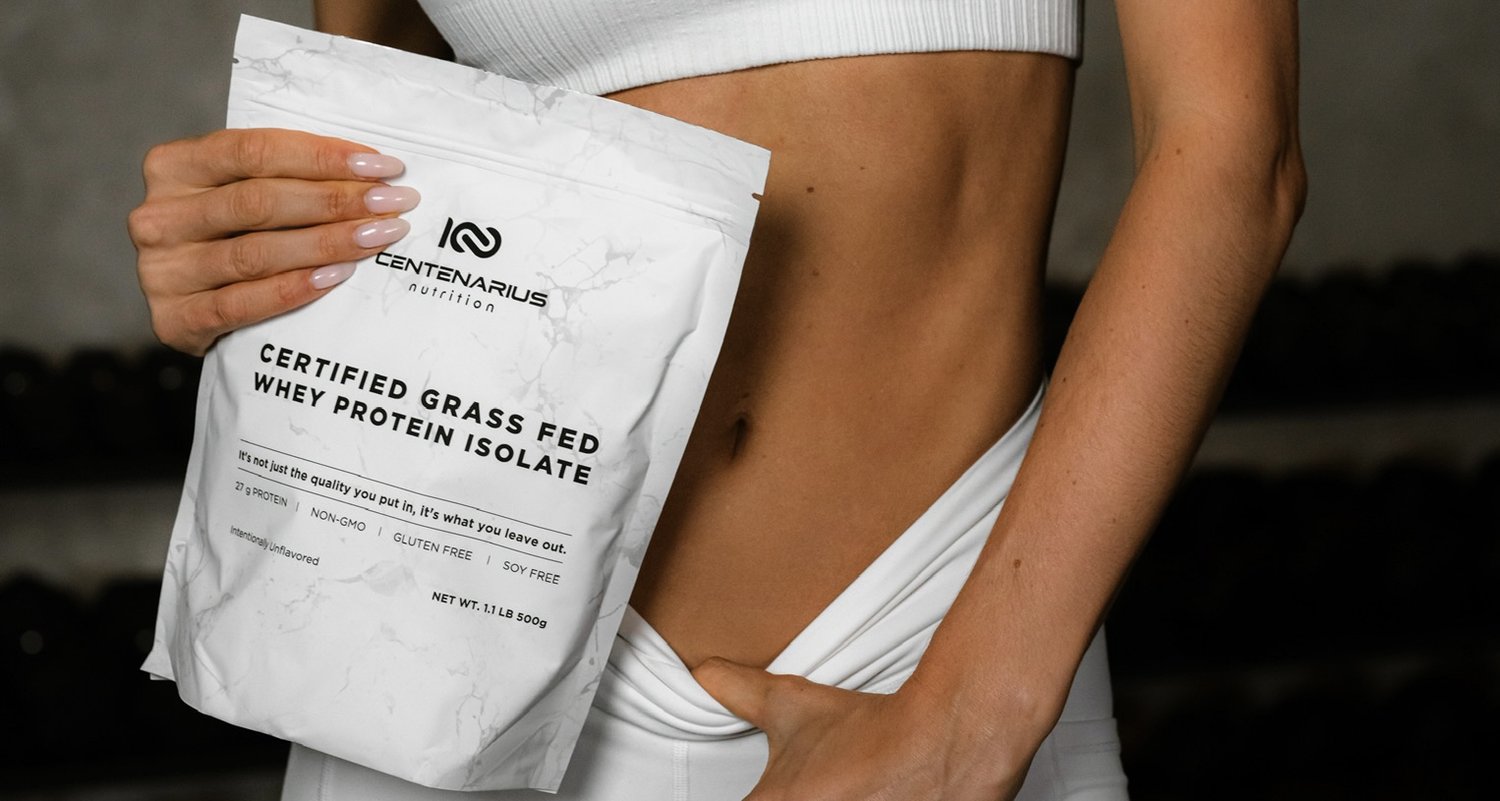
Centenarius Grass-Fed Whey Protein Isolate was created around that standard.
It is made with Truly Grass Fed certified Irish whey protein isolate and processed using patented ice-cold cross-flow microfiltration. It is unflavored, virtually lactose-free, and formulated without gums, sweeteners, flavors, or unnecessary additives.
Each serving provides 27 grams of clean protein and 6.7 grams of BCAAs. The formula contains only whey protein isolate and non-GMO sunflower lecithin for mixability.
No gums. No sweeteners. No flavors. No fillers. No unnecessary additives.
It is independently third-party tested for heavy metals and purity, made in the USA, and designed for people who want a clean protein powder they can use daily without the usual heaviness.
If protein powder has caused bloating for you before, this is the type of formula worth looking for: minimal, unflavored, carefully filtered, and tested for purity.
View the full sourcing details and formulation here
Frequently Asked Questions
Can protein powder cause bloating?
Yes. Protein powder can contribute to bloating, especially if it contains lactose, artificial sweeteners, sugar alcohols, gums, thickeners, or a long list of added ingredients. The protein source matters, but the full formula often matters more.
Why does my protein shake make me bloated?
Common reasons include sweeteners, gums, lactose from whey concentrate, drinking too quickly, large serving size, or choosing a heavily flavored formula. Reading the full ingredient list is the best place to start.
What protein powder does not cause bloating?
No protein powder can guarantee zero bloating for everyone, because digestion is individual. But a clean, unflavored whey protein isolate with minimal ingredients, low lactose, no gums, no sweeteners, and third-party testing is often a better choice for sensitive digestion.
Is whey protein isolate better for bloating?
Whey protein isolate may be easier to tolerate than whey concentrate because it is more filtered and contains far less lactose. For sensitive digestion, an unflavored whey isolate without gums, sweeteners, or fillers is often a strong option.
Is plant-based protein easier to digest than whey?
Not always. Plant proteins can contain fibers and plant compounds that may ferment in the gut and contribute to gas or bloating for some people. Some people do well with plant protein, while others tolerate a clean whey isolate better.
What should I avoid in protein powder if I bloat easily?
Avoid long ingredient lists, sugar alcohols, artificial sweeteners, carrageenan, xanthan gum, cellulose gum, maltodextrin, artificial flavors, and whey concentrate if you are sensitive to lactose.
Does unflavored protein powder taste bad?
Unflavored whey isolate has a mild dairy taste and is usually easy to mix into coffee, smoothies, yogurt, oatmeal, or recipes. It is not sweet, which is why many people with sensitive digestion prefer it.
Is whey protein isolate lactose-free?
Whey protein isolate is not always completely lactose-free, but it is typically very low in lactose because of the additional filtration process. Centenarius Grass-Fed Whey Protein Isolate is virtually lactose-free.
Is protein powder that doesn’t cause gas the same as non-bloating protein powder?
They are closely related searches. Gas and bloating often come from the same triggers: sweeteners, sugar alcohols, gums, lactose, or ingredients that ferment in the gut. A simpler formula is usually easier to evaluate and tolerate.
Sources and Further Reading
Sugar alcohols and digestive symptoms
Whey protein isolate and concentrate differences
Heavy metals in protein powders
*These statements have not been evaluated by the Food and Drug Administration. This product is not intended to diagnose, treat, cure, or prevent any disease.


