

Most people choose protein powder by looking at the front of the label: grams of protein, flavor, texture, and price.
But for daily users, the more important question may be what the front label does not show.
Independent testing published in 2025 raised new concerns about heavy metals in popular protein powders and shakes - specifically lead, cadmium, arsenic, and mercury. These contaminants can enter ingredients through soil, sourcing, flavoring, and processing. When protein powder becomes part of a daily routine, small exposures matter more because they are repeated scoop after scoop.
This does not mean all protein powders are the same. It means source, testing, filtration, and transparency matter more than marketing claims.
What Independent Testing Found in 2025
In October 2025, Consumer Reports tested 23 protein powders and ready-to-drink shakes across dairy, beef, and plant-based categories. Products were purchased from major retailers and tested across multiple batches over three months to reduce variance.
More than two thirds of protein powders tested contained more lead per serving than Consumer Reports' food safety experts consider safe for an entire day. In some products, lead levels exceeded that daily safe limit by more than ten times in a single serving.
Consumer Reports, October 2025 - 23 products tested
Lead was the dominant concern, but not the only one. Three products also exceeded Consumer Reports' thresholds for cadmium and inorganic arsenic - both classified as carcinogens by the EPA. One dairy-based product registered 8.5 micrograms of inorganic arsenic per serving: twice the daily safety limit set by their scientists.
The Clean Label Project published a separate, larger investigation in January 2025. They tested 160 protein powders from the top 70 brands, covering an estimated 83% of market share, screening each product for 258 chemicals and heavy metals.
47% of protein powders tested exceeded at least one federal or state regulatory threshold for lead, cadmium, arsenic, or mercury. Chocolate-flavored protein powders contained 110 times more cadmium than vanilla varieties on average.
Clean Label Project, January 2025 - 160 products tested
Plant-based proteins came off worst in both studies. The Clean Label Project found plant-based powders contained five times more cadmium than whey-based alternatives. Consumer Reports found plant proteins averaged nine times the lead concentration of dairy-based options.
These findings raised important questions about sourcing, testing, and transparency in the protein category - and what daily users should know before choosing a product.
The FDA does not review or test supplements before they reach consumers. There is no mandatory pre-market approval. Brands carry full responsibility for their own safety determinations, and there is no requirement to disclose what those tests found - or whether they were run at all.
Why Heavy Metals End Up in Protein Powder
This is primarily a sourcing problem, not a manufacturing one. Heavy metals - cadmium, lead, arsenic, mercury - occur naturally in soil. Plants absorb them through their root systems as they grow. Crops raised in heavily farmed or industrially impacted regions accumulate more. When that plant material is concentrated into protein powder form, whatever the plant absorbed concentrates alongside it.
Whey protein, derived from dairy, bypasses much of this. Cows metabolize and filter many of these compounds before the protein fraction is extracted. This is why both major investigations found lower contamination levels in whey-based products compared to plant-based alternatives. It is not a guarantee of clean - processing method and sourcing still matter significantly within the whey category - but it is a meaningful structural advantage.
On Chocolate Flavoring: Cocoa is grown in tropical volcanic soils naturally high in cadmium. The cacao plant absorbs it through its roots, it concentrates in the bean, and that cadmium carries through into the cocoa powder used for flavoring. This is why the Clean Label Project found chocolate-flavored protein powders contained 110 times more cadmium than vanilla varieties, and why 65% of chocolate protein powders exceeded California Prop 65 lead limits versus 35% of vanilla products. For daily users, flavoring choice is not a cosmetic variable. It is a meaningful contamination input.
The Five Criteria That Actually Matter
Most buyers evaluate protein powder based on the front panel: protein grams, flavor, price. The information that actually determines quality sits on the back label and in documentation most brands would prefer you never asked for. Here is what to look for.
1. Heavy metal testing - per batch, not one-time
Third-party tested is one of the most overused and least meaningful phrases in the supplement industry. It can mean tested once during initial formulation, tested for banned substances only, or tested for microbial contamination but not contaminants. The specific standard to look for: heavy metal testing conducted per production batch, with results available on request. If a brand cannot tell you when their most recent heavy metal panel was run and what it found, that absence of transparency is itself the answer.
2. A short, verifiable ingredient list
Turn the container over. Read the full ingredient list - not just the macros on the front panel. A high-quality protein powder does not require carrageenan, maltodextrin, sucralose, xanthan gum, or a list of stabilizers to function. These additives serve manufacturing - they improve texture, mixability, shelf life, and cost margins. They serve your body very little. A clean protein powder is achievable with one or two ingredients. Many brands have demonstrated this. The longer the ingredient list, the more questions it warrants.
3. Cold cross-flow microfiltration for whey isolate
Processing method determines protein quality, digestibility, and how much the finished product deviates from the raw material. Cold cross-flow microfiltration (CFM) uses ceramic mesh filters to separate protein from lactose and fat without heat or chemical solvents. Heat denatures protein structure. Chemical processing leaves residue. CFM does neither. It also preserves bioactive fractions - specifically Alpha-Lactalbumin and Glycomacropeptides - that ion-exchange filtration destroys. Some people who experience bloating from whey may be reacting to lactose, additives, sweeteners, or processing quality - not the protein itself. The form of filtration determines what ends up in the scoop.
4. Named source origin - not generic premium sourcing
Where the protein originates is verifiable in a way that vague sourcing claims are not. Named origins - a specific country, a specific certification body, a specific breed of cattle - create accountability. Generic phrases like premium grass-fed or high-quality sourcing are marketing language that costs nothing to print. A brand willing to name the country, the farm standard, and the verification body behind it is accepting a level of accountability that most brands actively avoid.
5. Unflavored or vanilla over chocolate - for daily users
Given what independent testing found about chocolate flavoring and cadmium concentrations, flavor choice carries more weight than most buyers realize - particularly for people using protein powder daily. Vanilla and unflavored products tested significantly cleaner in both major investigations. If you use protein powder occasionally, the risk calculus is different. If it is part of a daily protocol, the flavoring choice is worth factoring in the same way source quality is.
What Grass-Fed Actually Means - and When It Doesn't
Grass-fed is one of the most claimed and least regulated terms on protein powder packaging. In the United States, there is no binding federal standard that defines what percentage of a cow's diet must come from grass for a product to carry that label. In practice, this means a cow that grazes for part of the year and spends the rest in a feedlot can still produce milk that ends up in a product marketed as grass-fed.
Ireland is the only country in the world with a government body specifically created to verify grass-fed dairy claims. In 2019, Ireland became the first country to nationalize a grass-fed dairy product standard, enforced by Bord Bia, the national food board. Under Irish law, a minimum 95% verified grass-fed diet is required to make any grass-fed claim on a dairy product, including whey protein. That 95% figure is not voluntary - it is legally enforceable.
The underlying agricultural conditions explain why Ireland was the country that could establish this standard. The island's limestone bedrock gives its soil natural alkalinity, which supports year-round pasture growth without chemical rebalancing. The perennial rye-grass common to the south of the country grows continuously through the year. Combined with Ireland's mild Atlantic climate, cows graze outdoors for the majority of their lives - not as a marketing concept but as a practical reality of the geography.
Cattle breed also matters and is rarely discussed. The Friesian Jersey cross, common in Irish grass-fed dairy, is specifically known for the quality of milk it produces. The Holstein, dominant in high-volume commercial dairy operations, is bred primarily for quantity. The distinction is meaningful when protein quality, amino acid profile, and bioactive fraction content are the variables you care about.
The Regulatory Gap You Are Navigating
The FDA does not approve dietary supplements before they are sold. It does not require pre-market testing or safety verification. cGMP certification governs manufacturing facility standards but does not mandate heavy metal testing or require that results be disclosed to consumers.
The entire burden of quality verification falls on the consumer - unless the brand voluntarily carries it through independent testing, disclosed results, and traceable sourcing. The difference between a brand that does this and one that does not is largely invisible from the outside. It requires asking specific questions: What was tested? By whom? When? What did it find?
The brands that answer those questions with specifics give daily users the transparency they need to make an informed choice. That willingness to be specific is the signal worth paying attention to.
Choose Protein You Can Trust Daily
Applying the criteria above produces a short list. Most protein powders on the market do not meet all five. Many fail at the first or second.
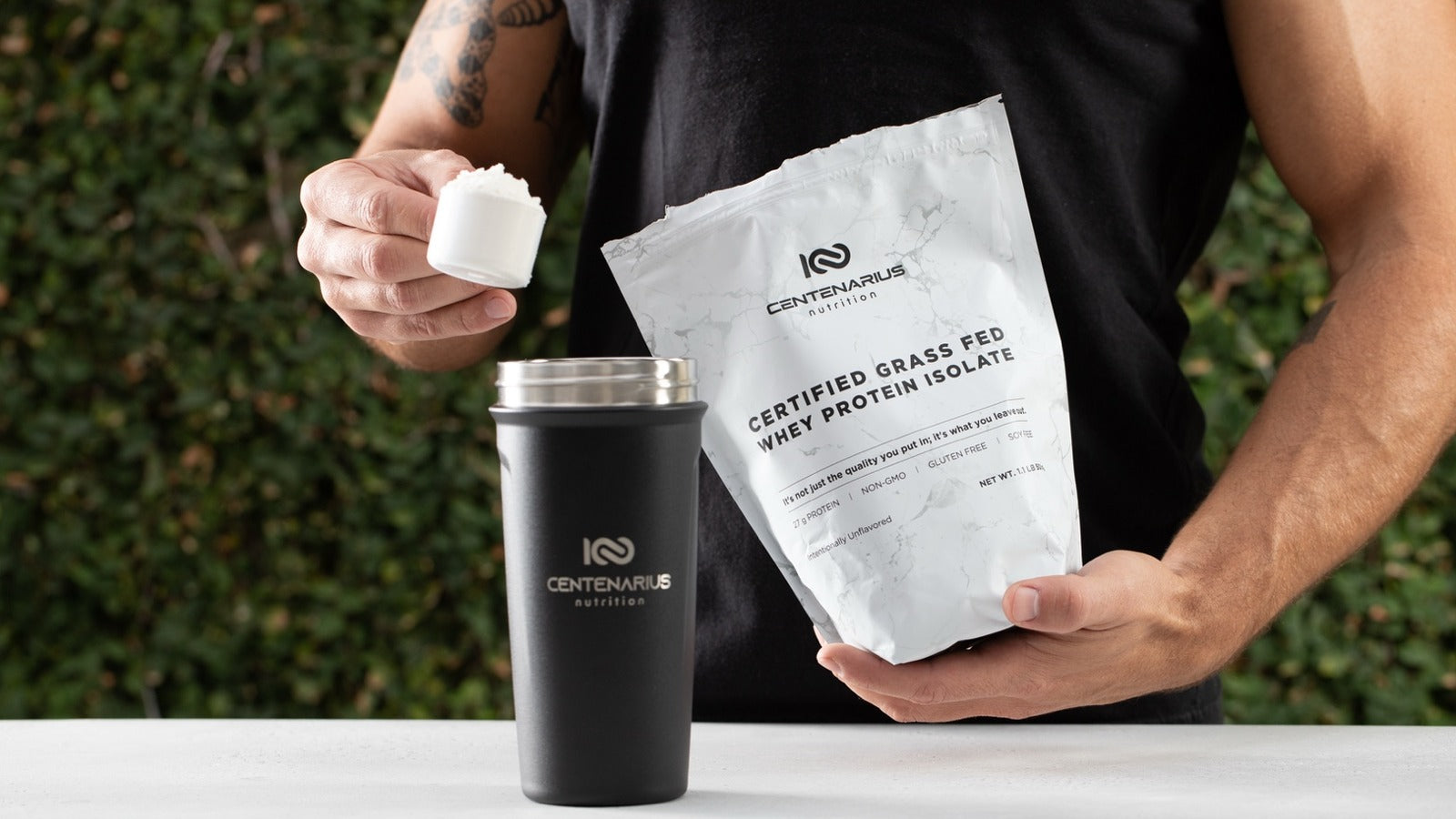
Centenarius Whey Protein Isolate is sourced from Irish grass-fed dairy, verified under Bord Bia's national 95% grass-fed standard. We use patented cold cross-flow microfiltration: no heat, no chemicals, protein left in its native undenatured state with Alpha-Lactalbumin and Glycomacropeptides preserved. Two ingredients: whey protein isolate and Non-GMO Sunflower Lecithin for mixability. No sweeteners, no gums, no fillers. Heavy metal tested every batch. 27 grams of protein per serving, virtually lactose-free.
View the full formulation and sourcing details here.

Frequently Asked Questions
Is whey protein lower in heavy metals than plant-based protein?
Based on the two largest independent investigations published in 2025, yes. Whey-based proteins consistently tested lower for heavy metal contamination than plant-based alternatives. The Clean Label Project found plant-based powders contained five times more cadmium than whey on average. Consumer Reports found plant proteins had nine times the lead concentration of dairy proteins on average. The mechanism is structural: plants absorb heavy metals directly from soil through their root systems during growth. Dairy bypasses this step. Being whey is a starting advantage, not a guarantee - processing method and source quality still determine whether a whey protein is actually clean.
What does third-party tested mean on a protein powder label?
Very little without additional specificity. Third-party testing can mean tested for banned athletic substances, tested for microbial safety, tested once during initial formulation, or tested at every production batch. None of these automatically includes heavy metal screening. The meaningful version of this claim names what was tested, who tested it, and how recently.
Why does chocolate protein powder have higher heavy metal levels?
Cocoa is the primary reason. Cacao is grown in tropical regions with volcanic soils that are naturally elevated in cadmium. The plant absorbs cadmium through its root system, it concentrates in the bean, and carries through into the cocoa powder used to flavor protein products. The Clean Label Project found chocolate protein powders contained 110 times more cadmium than vanilla varieties on average. This is not a processing failure - it is a characteristic of the ingredient.
Is bloating from whey protein always a sign of lactose intolerance?
Not necessarily. Some people who experience bloating from whey may be reacting to lactose, additives, sweeteners, or processing quality rather than the protein itself. Whey protein isolate processed through cold cross-flow microfiltration removes lactose as part of the filtration process, making it virtually lactose-free. Switching to a clean, cold-processed isolate with a minimal ingredient list resolves digestive discomfort for many people who assumed they could not tolerate whey.
Does organic certification mean a protein powder has lower heavy metals?
No. The Clean Label Project found organic protein powders averaged three times more lead and twice the cadmium compared to non-organic products. The explanation is compositional: most organic protein products are plant-based, and plant proteins absorb more heavy metals by nature of how they grow. Organic certification governs pesticide use and farming practices. It does not test for or limit heavy metal content.
How do I know if a protein powder's grass-fed claim is real?
Ask what standard it is certified to and who verifies it. In the US, there is no binding federal definition of grass-fed for dairy. Ireland is the only country with a national law requiring a minimum 95% verified grass-fed diet, enforced by Bord Bia. New Zealand, often cited as a grass-fed dairy source, guarantees a minimum of 75% grass-fed with no requirement for cattle breed specificity. The difference between a claim backed by national law and one that is self-reported is significant.
These statements have not been evaluated by the Food and Drug Administration. This product is not intended to diagnose, treat, cure, or prevent any disease. Heavy metal data referenced in this article is sourced from Consumer Reports (October 2025) and the Clean Label Project Protein Study 2.0 (January 2025).


