

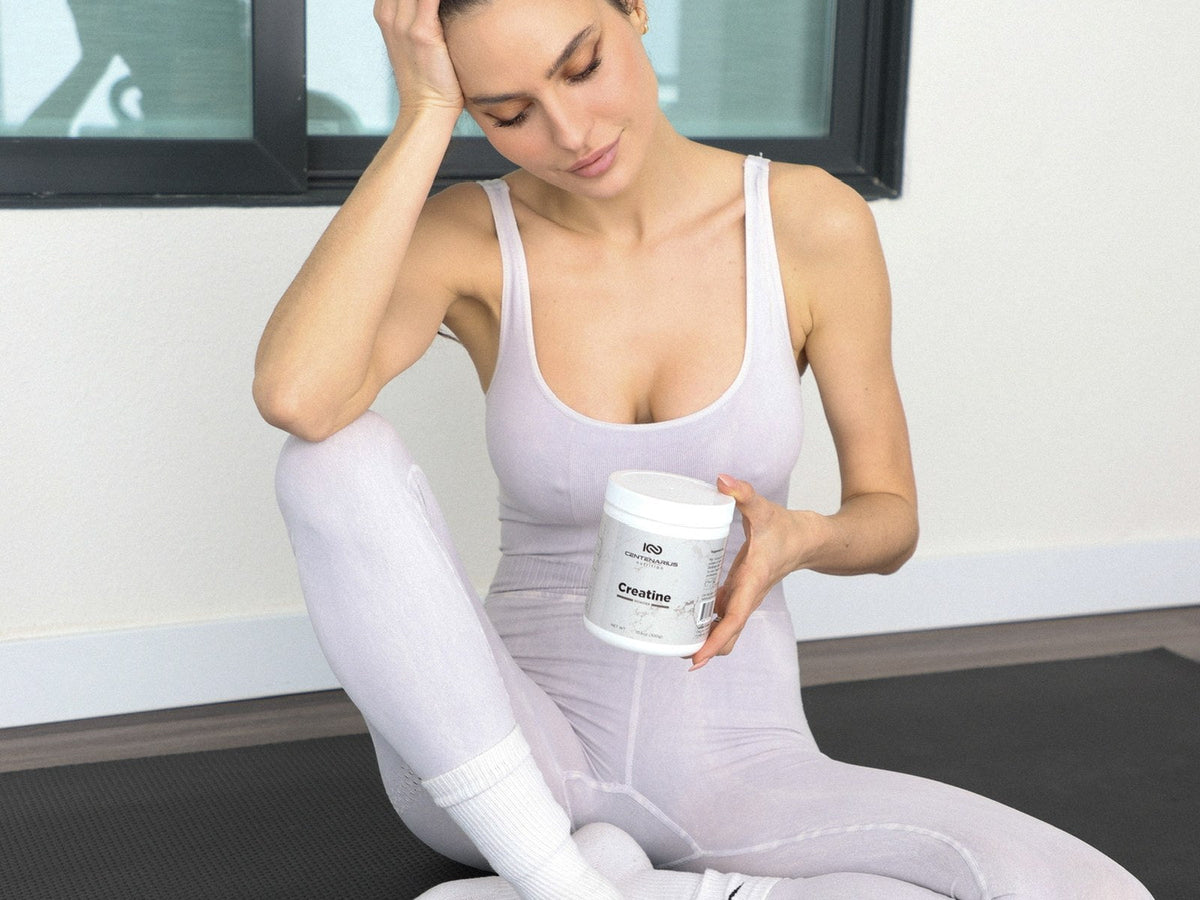
What Is Creatine Monohydrate?
Creatine monohydrate is creatine bound to a single water molecule. It is the form used in the vast majority of creatine research, including studies on strength, power, lean mass, and more recently, brain health.
The International Society of Sports Nutrition's position stand on creatine identifies creatine monohydrate as the most effective nutritional supplement available for increasing high-intensity exercise capacity and lean body mass.
What Is Creatine HCL?
Creatine hydrochloride, or HCL, is creatine bound to hydrochloric acid. This makes it considerably more soluble in water than monohydrate.
Because of that solubility, creatine HCL is often marketed at smaller doses, with claims of better absorption and fewer stomach issues.
Creatine Monohydrate Vs. HCL: Key Differences
When comparing creatine monohydrate vs. HCL, five differences stand out.
Research. Monohydrate is supported by hundreds of studies. HCL has only a handful, and they have not shown it to be more effective than monohydrate.
Solubility. HCL dissolves more easily. Monohydrate can leave a slight residue, although a finely milled powder mixes well.
Dose. Research supports 3 to 5 grams of monohydrate per day. HCL is marketed at smaller doses, but those claims lack strong head-to-head evidence.
Stomach comfort. Some people report less discomfort with HCL. Most people tolerate 3 to 5 grams of monohydrate well, especially when taken with food.
Cost. Monohydrate is typically less expensive per effective serving.
Is Creatine HCL Better Absorbed?
Higher solubility does not automatically mean more creatine reaches your muscles. Creatine monohydrate is already absorbed very efficiently when taken by mouth.
The idea that HCL works at a fraction of the dose has not been confirmed by robust clinical trials. Until it is, monohydrate remains the benchmark.
It is also worth noting that most of what we know about creatine's long-term safety comes from monohydrate research. Newer forms like HCL simply have less data behind them, which matters for a supplement many people take daily for years.
How To Take Creatine Monohydrate
Creatine monohydrate is simple to use. Most people take 3 to 5 grams once a day, every day, including rest days. Because creatine works by saturating your muscles over time, consistency matters more than timing.
Mix it into water, juice, coffee, or a protein shake. Taking it with a meal can help if you have a sensitive stomach, and splitting a larger dose into two servings is another easy option. Stay well hydrated throughout the day.
Which Form Should You Choose?
For most people, creatine monohydrate is the clear choice. It is the most studied, the most cost-effective, and the form behind the research on strength, recovery, and healthy aging.
Purity matters as much as form. Creatine quality varies by manufacturer, so look for a trusted source, third-party testing, and no added fillers. Read more in why athletes are turning to high-quality creatine.
The Centenarius Creatine
Our Creatine Monohydrate Powder is made with Creapure®, produced in Germany to strict purity standards. It is vegan, kosher, and halal, with no additives, and every batch is independently tested.
To go deeper, read about the benefits of creatine and creatine for longevity.


